

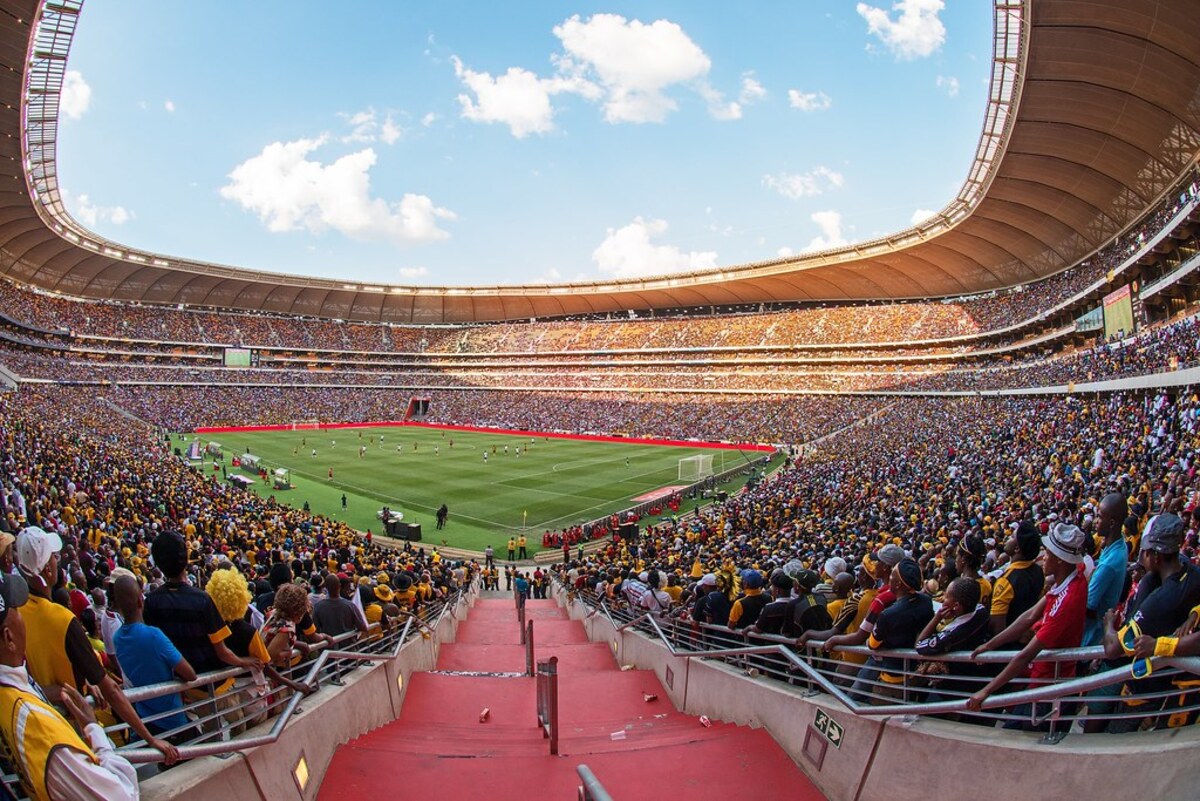
Johannesburg faces the prospect of losing the historic Soweto Derby after Premier Soccer League chairman Irvin Khoza warned that the fixture could be permanently moved to Durban due to persistent operational and security concerns at the venue.
The blockbuster encounter between South African football giants Kaizer Chiefs and Orlando Pirates stands as one of the continent's most fiercely contested spectacles, drawing massive global interest whenever the two sides meet on the domestic calendar.
However, mounting frustrations over crowd management failures, severe traffic congestion, and counterfeit ticketing have placed the traditional hosting arrangements under intense administrative scrutiny from the league hierarchy ahead of future fixtures.
League officials have expressed deep dissatisfaction with the handling of matchday logistics at the Nasrec-based venue, pointing to recurring structural vulnerabilities that continue to compromise the safety of tens of thousands of passionate supporters.
Chairman Irvin Khoza highlighted the stark contrast in operational efficiency demonstrated by alternative host cities, particularly praising the seamless execution of recent domestic cup finals held outside the Gauteng province.
Referencing previous high-profile encounters hosted in KwaZulu-Natal, Khoza noted that major clashes involving the country's leading clubs proceeded without security incidents or organizational breakdowns during high-stakes tournament matches.
We went to Durban for the final of Pirates and Chiefs in the Nedbank final, Khoza said, questioning the ongoing logistical failures regularly experienced in the Johannesburg metropolitan area.
Pirates and Sundowns, nothing of the sort happened. Why here? Khoza added, emphasizing the growing frustration felt by league executives regarding the repeated administrative and security challenges at the current venue.
The league leadership has issued a strict ultimatum to non-performing stakeholders and venue management teams, demanding immediate rectifications ahead of an upcoming Thursday briefing or face severe public accountability measures.
Maybe the future will be that instead of going to FNB Stadium, let us go to Durban, Khoza stated, pointing toward a potential permanent shift in venue strategy for the league's marquee matches.
Because they are the good hosts; they do things professionally. All our events are seamless, Khoza added, noting that the governing body will prioritize crowd safety and professional event delivery above historical traditions.
The debate over the venue brings painful historical context to the forefront of South African football administration, recalling previous tragedies that deeply scarred the domestic game over the past few decades.
In 2001, the nation experienced its deadliest sporting catastrophe when forty-three spectators lost their lives during a Soweto Derby at Ellis Park due to severe stadium overcrowding and inadequate emergency crowd management.
Tragedy struck the fixture again in 2017 when two individuals were tragically killed during a stadium stampede at FNB Stadium during the annual Carling Black Label Champion Cup pre-season encounter.
Despite subsequent security enhancements introduced by authorities, recurring chaotic gate scenes and severe surrounding traffic gridlock continue to plague fixtures involving the Soweto giants, fueling ongoing anxieties.
In stark contrast, Moses Mabhida Stadium in Durban has cultivated a pristine reputation for staging high-stakes domestic encounters involving the nation's elite teams without experiencing major logistical failures or crowd safety breaches.
Backed by the proactive support of the eThekwini Metropolitan Municipality, the coastal venue has consistently delivered rigorous safety protocols, efficient traffic flow management, and top-tier hospitality infrastructure for large crowds.
Premier Soccer League chief executive Mato Madlala previously underscored Durban's comprehensive operational capacity, noting that the city's modern facilities and professional administrative approach provide an ideal environment.
As the governing body weighs its options ahead of upcoming scheduling decisions, stakeholders in Johannesburg face mounting pressure to address systemic organizational flaws before the iconic fixture is permanently relocated.


Join the conversation