

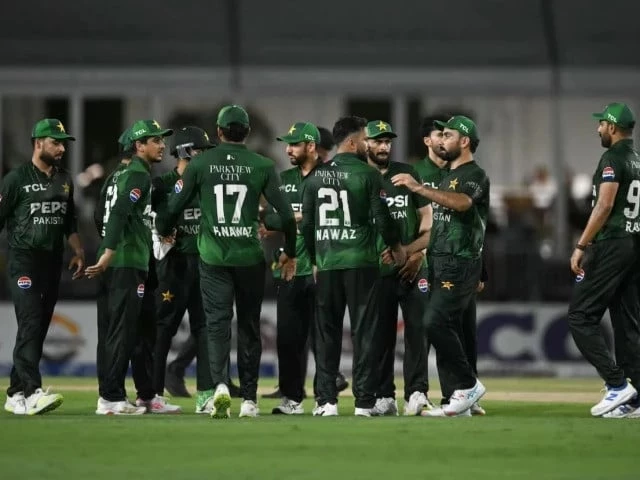
The announcement of Pakistan's central contracts has been delayed indefinitely following disappointing performances by the national team during their recent tour of England. Progress on finalising the new deals has stalled at the Pakistan Cricket Board headquarters in Karachi.
Authorities within the board indicated that official confirmation of the contracts will now depend on the team delivering improved results during the upcoming home season. The proposed agreements are intended to cover the period from July 1, 2026, through to June 30, 2027.
Players were initially briefed on the upcoming structure before departing for tours of the West Indies and England in July. A preliminary shortlist containing thirty players had already been prepared by selectors prior to the team's struggles overseas.
However, a below-par showing in England, which culminated in a series whitewash for the national side, brought the approval process to a complete standstill. Consequently, the board has yet to officially unveil the finalised list of centrally contracted cricketers.
Internal sources suggest that modifications to the initial roster are now likely before any announcement is made. Senior players including Mohammad Rizwan and Shan Masood are reportedly facing an increased risk of being dropped from the final list.
The preliminary shortlist of thirty athletes was generated using a specialised algorithm developed by an American software company. This analytical tool evaluated players based on their past international and domestic performances across all three formats of the game.
National selectors were provided with a structured fifteen-point assessment framework to help evaluate each cricketer's current form, past achievements, and future prospects. Under this evaluating mechanism, players scoring between fifty and sixty points become eligible for central contracts.
The proposed contract structure introduces strict regulations regarding players participating in lucrative overseas T20 leagues. Test specialists will not be granted the necessary no-objection certificates to feature in foreign franchise competitions during the season.
Despite facing restrictions on foreign leagues, red-ball specialists will retain permission to participate in county cricket and other traditional forms of the game. Players classified in other categories will be permitted to enter a limited number of overseas tournaments.
Meanwhile, cricketers placed within Category C will face no such restrictions regarding their participation in foreign competitions. This regulatory difference has created significant discussion among the playing group regarding their preferred categorisation.
According to reports from within the team camp, several cricketers are actively seeking placement in Category C to maintain their freedom. These players have reportedly assured the board that they will remain available for national selection in any format whenever required.
To qualify for the senior tiers encompassing categories A, AB, BC, and C, cricketers must meet strict domestic participation requirements. Players must feature in at least four Test matches, six one-day internationals, or six T20 internationals over the course of a year.
Category D, which is specifically reserved for emerging young cricketers, remains fully exempted from these minimum international appearance thresholds. All contracted players are also required to actively participate in domestic cricket tournaments within their respective formats.
The financial structure outlines distinct monthly retainers and match fees across the various tiers. Test specialists positioned in the first tier of Category A are slated to receive a monthly retainer of four million rupees, while second-tier players earn 3.6 million rupees.
Players in the premier tier of Category AB are allocated 4.8 million rupees per month, compared to 3.8 million rupees for the second tier. Monthly retainers for Category BC players are set at 3.4 million rupees and 2.6 million rupees respectively.
Specialised T20 players will receive retainers of 2.6 million rupees and two million rupees depending on their assigned tier. Meanwhile, emerging talents qualifying under Category D are designated to receive a monthly payment of one million rupees.
Overall, the Pakistan Cricket Board has allocated a total budget of 1.1 billion rupees to cover player retainers and match fees. The highest proposed monthly retainer of 4.8 million rupees translates to an annual guaranteed earning of 57.6 million rupees for top-tier athletes.
When factoring in match fees and additional performance payments, a leading player's total annual earnings could rise to between eighty and ninety million rupees. However, this remains significantly lower than potential earnings available through franchise cricket circuits.
As a point of comparison, opening batsman Saim Ayub reportedly earned 126 million rupees during a single season of the Pakistan Super League. Furthermore, stars competing across multiple overseas leagues can surpass annual earnings of 200 to 220 million rupees.
These substantial financial disparities explain why several national cricketers are keen to secure placements in Category C to avoid restrictive no-objection certificate policies. Despite the preferences of the players, the Pakistan Cricket Board retains the final authority on all appointments.


Join the conversation